01

DAIKINECOSYSTEM

Project Overview

Context

Daikin Applied Europe needed to design a new solution for fancoil control in large multi-zone systems. The product featured a 4.3" touch interface managed by a control PCB, capable of supporting advanced logic for optimizing and managing the fancoil unit network. A mobile Web App dedicated to remote pre-configuration was also planned.

Challenge

Designing from scratch two complementary interfaces for a complex technical system. Room Controller and App had to make fancoil configuration, control, and management simple, while maintaining continuity between the embedded experience and remote pre-configuration, all within hardware constraints.

Approach

I was the UX lead primarily for the Room Controller side, working on technical requirements, flows, information architecture, and interface hierarchies. HMI and App were designed with consistent but context-adapted logic, through reviews with specialized technicians and careful attention to embedded device implementation constraints.

Impact

Ease of configuration, improved workflow for installer technicians, reduced on-site time thanks to saved pre-configurations, and the delivery of a feature-rich, easy-to-use Room Controller user interface. By creating a common logic between local control and remote configuration, the experience better supports the work of installers.
Architecture& Concept

Two interfaces, one system logic

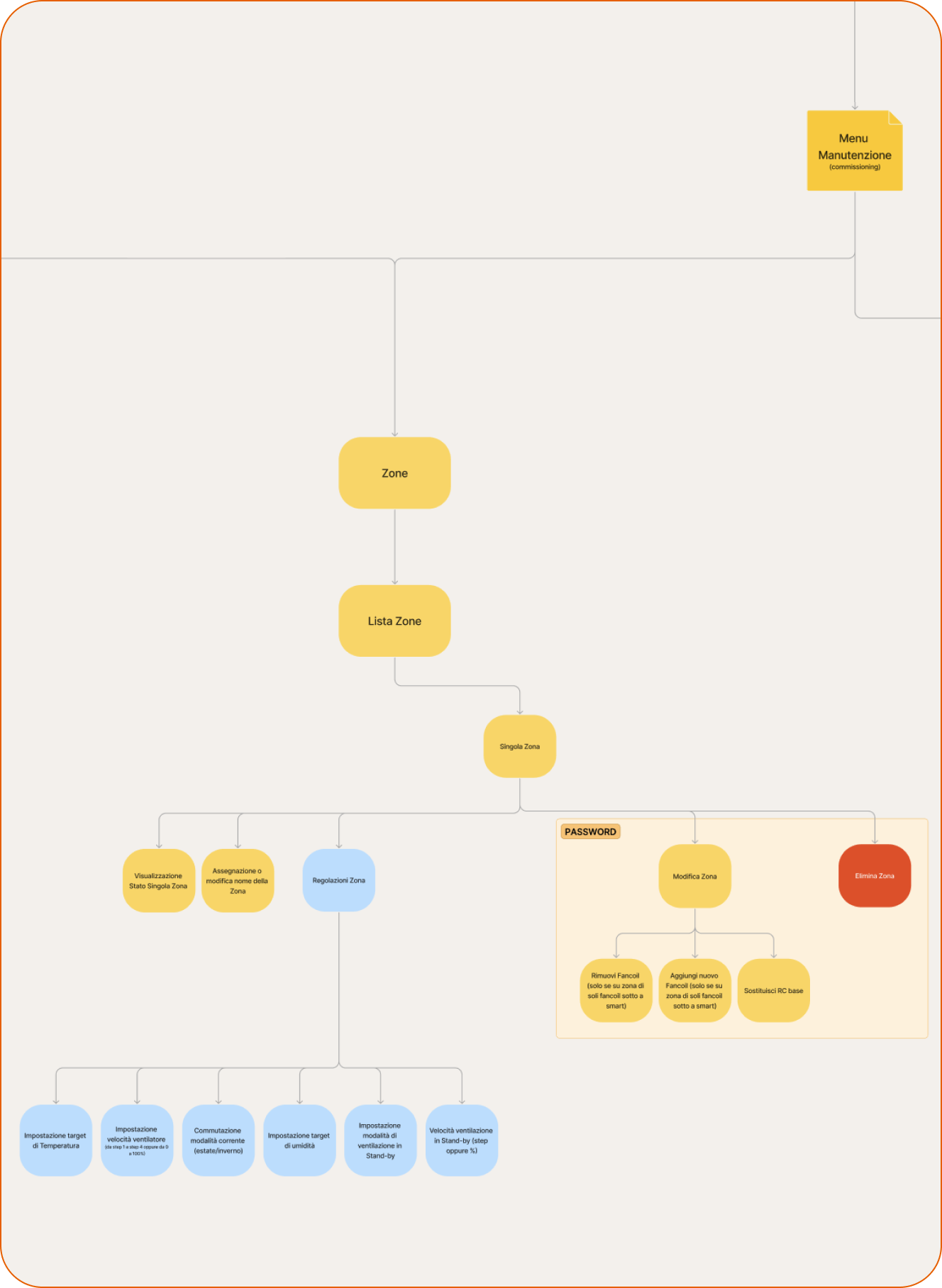
Room Controller and App were designed with mirrored architectures, to ensure continuity between local control and remote configuration.

Consistent actions, different modes

The same core functions were made available on both touchpoints, adapting flows, interactions, and priorities to the usage context.

Permission management

The architecture distinguishes between installer and end user, separating technical configurations, advanced controls, and everyday functions.

Hardware-constrained design

Navigation and interaction logic were defined taking into account the performance and constraints of the Room Controller, prioritizing simple paths, clear hierarchies, and reduced operational load.

Daikin Shinka information architecture diagram for zones, controls, and maintenance flows.

Daikin Shinka Controller

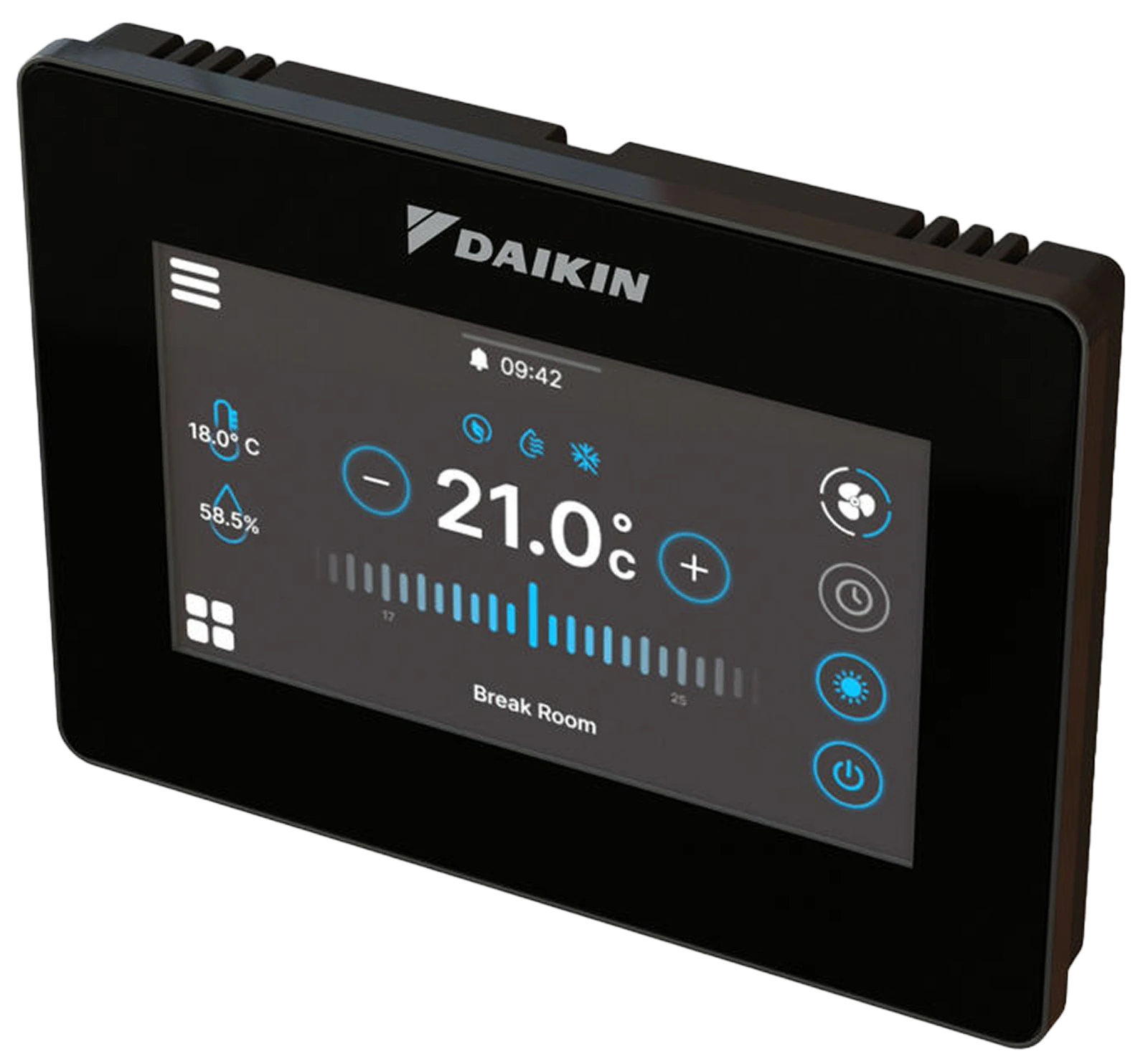
The operational core of the system, Shinka Touch was designed as a local interface for fancoil control and management. The design had to balance hardware constraints, limited memory, and the need for smooth interaction. The LVGL framework was leveraged to build a clear and coherent interface, maintaining a pleasant look and feel and an intuitive UX without burdening the device.

Role
UX/UI lead, analysis, interviews, flow definition, UX/UI design of final mockups.
Deliverable
Information architecture, wireframes, final mockups, and UI guidelines for LVGL implementation.
Goal
To create a lightweight, clear, and fluid local interface for fancoil control, respecting the hardware limits of the device, a 4.3" HMI.
Outcome

A lightweight, clear, and consistent UI to make local fancoil control immediate and accessible, within the hardware constraints of the Room Controller.

Daikin Shinka room controller showing the local fancoil control interface.

Daikin Shinka Manager

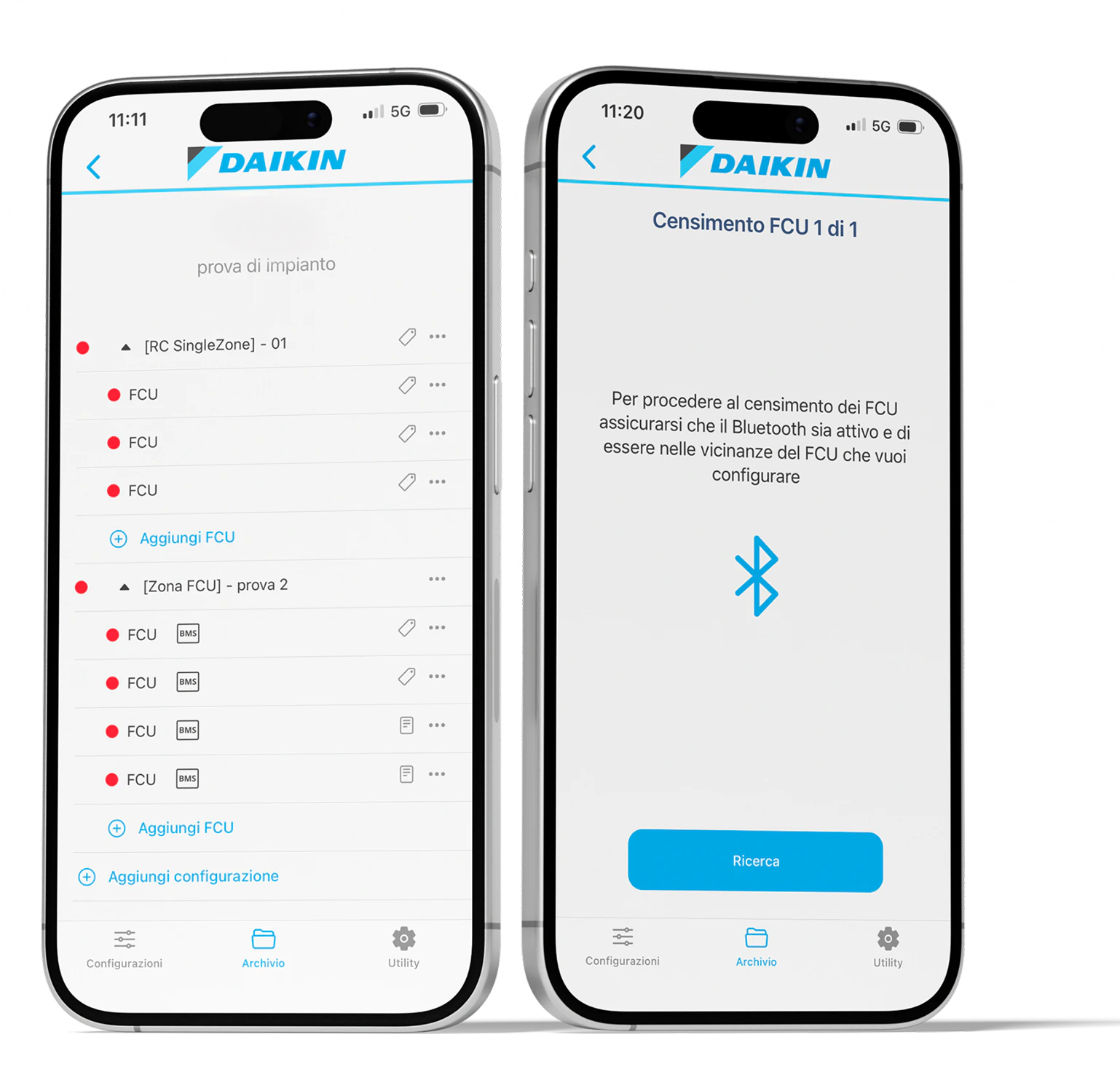
A mobile application designed to support installers and technicians in configuring the system before on-site intervention on the physical device. The app allows structures, zones, and parameters to be prepared more flexibly, reducing dependence on the Room Controller during operational activities.

Role
UX/UI design of the app, from flow definition to the creation of final mockups.
Deliverable
Experience architecture, user flows, wireframes, high-fidelity UI, and development specifications.
Goal
To create a mobile interface consistent with the Room Controller, capable of simplifying configuration, management, and data synchronization for technicians.
Outcome

A mobile app designed to extend the Shinka ecosystem beyond the physical device, enabling a remote workflow and simplifying on-site intervention and local control.

Two mobile screens from the Daikin Shinka Manager configuration application.

ProjectValue

Value Generated

The project shaped two complementary touchpoints to manage local control and remote configuration, making clearer the technical flows that previously would have remained tied to the physical device alone.

  • HMI UI designed around RC constraints
  • App for on-site configuration
  • Continuity between local and remote control

Skills Applied

The work required translating complex technical logic into usable interfaces, balancing functional requirements, hardware constraints, and the operational needs of installers and end users.

  • Turning technical requirements into UX flows
  • Flow architecture between HMI and App
  • UX/UI for embedded and mobile devices

Contribution

As the UX/UI lead, I was responsible for defining the UX architecture between Room Controller and App, separating roles, permissions, and usage contexts to make local control and remote configuration consistent.

  • UX architecture between HMI and App
  • Installer / end-user role management
  • UI adapted to hardware constraints