02

CLEASOFTWARESUITE

Project Overview

Context

Clea is a software suite built to offer digital services with added value on hardware devices. The platform brings together several modules dedicated to connectivity, device management, data, AI applications, and monitoring, with the goal of creating a unified ecosystem to manage complex industrial scenarios and enable new data-driven service models.

Challenge

The complexity was not only visual, but structural: the UX had to hold together diverse products, diverse roles, and very different levels of technical depth. Each module had to work independently, without feeling disconnected from the rest of the suite.

Approach

I worked on defining shared UX/UI logic for the suite and was owner of specific areas, including Clea Console, which I designed end-to-end. The work covered navigation, dashboard, components, operational flows, role-differentiated views, and consistency with the Clea design system.

Impact

The result is a digital ecosystem coherent and modular, capable of supporting the management of devices, data, and Edge AI applications through a clear and consistent experience. The suite thus becomes a scalable foundation for building, monitoring, and evolving industrial IoT solutions.
Clea DesignSystem

A shared system for the Clea ecosystem

Custom design system to support a modular software suite, maintaining visual and functional coherence across products, sections, and diverse platform flows.

Reusable components and patterns

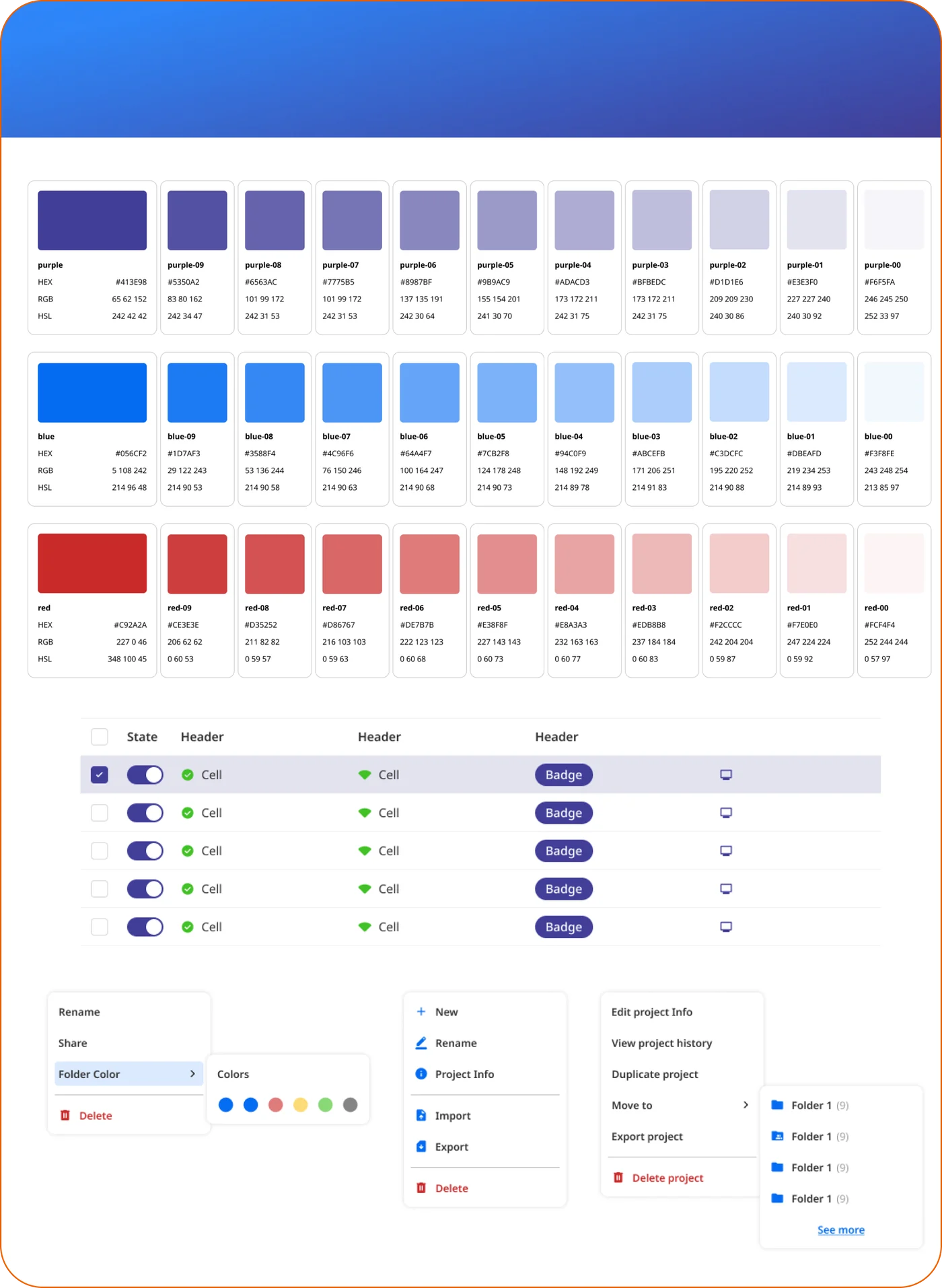
The system defines components, states, variables, and design patterns built to adapt to different usage contexts, ensuring continuity across the various areas of the Clea ecosystem.

Accessibility and consistency

Colors, typography, states, components, and guidelines were defined taking into account WCAG principles, with attention to readability, contrast, usability, and interface scalability.

Design to development

The design system structure was conceived to make the handoff from mockups to code clearer, creating a shared foundation between design and development for reusable, maintainable, and evolving interfaces.

Clea design system color scales, interface states, and reusable components.

The CleaEcosystem

Designing an ecosystem

Working on Clea required a systemic vision capable of holding together products, modules, and diverse touchpoints. The design goal was to build a coherent, recognizable, and scalable experience within a complex software suite.

Making complexity readable

Technical flows, operational data, configurations, and advanced functions were translated into clearer and more usable paths. The design focused on information hierarchies, navigation, and patterns capable of reducing cognitive load for users with different needs.

A shared language across products

Dashboards, modules, operational tools, and dedicated views were designed with shared logic, ensuring continuity across the ecosystem's areas. The design system consolidated components, states, and behaviors into a common foundation.

System, service, interface

The goal was to connect processes, roles, data, and interactions into an end-to-end experience. The result is a design structure capable of supporting the suite's evolution and making the transition between business needs, technical requirements, and final interfaces smoother.

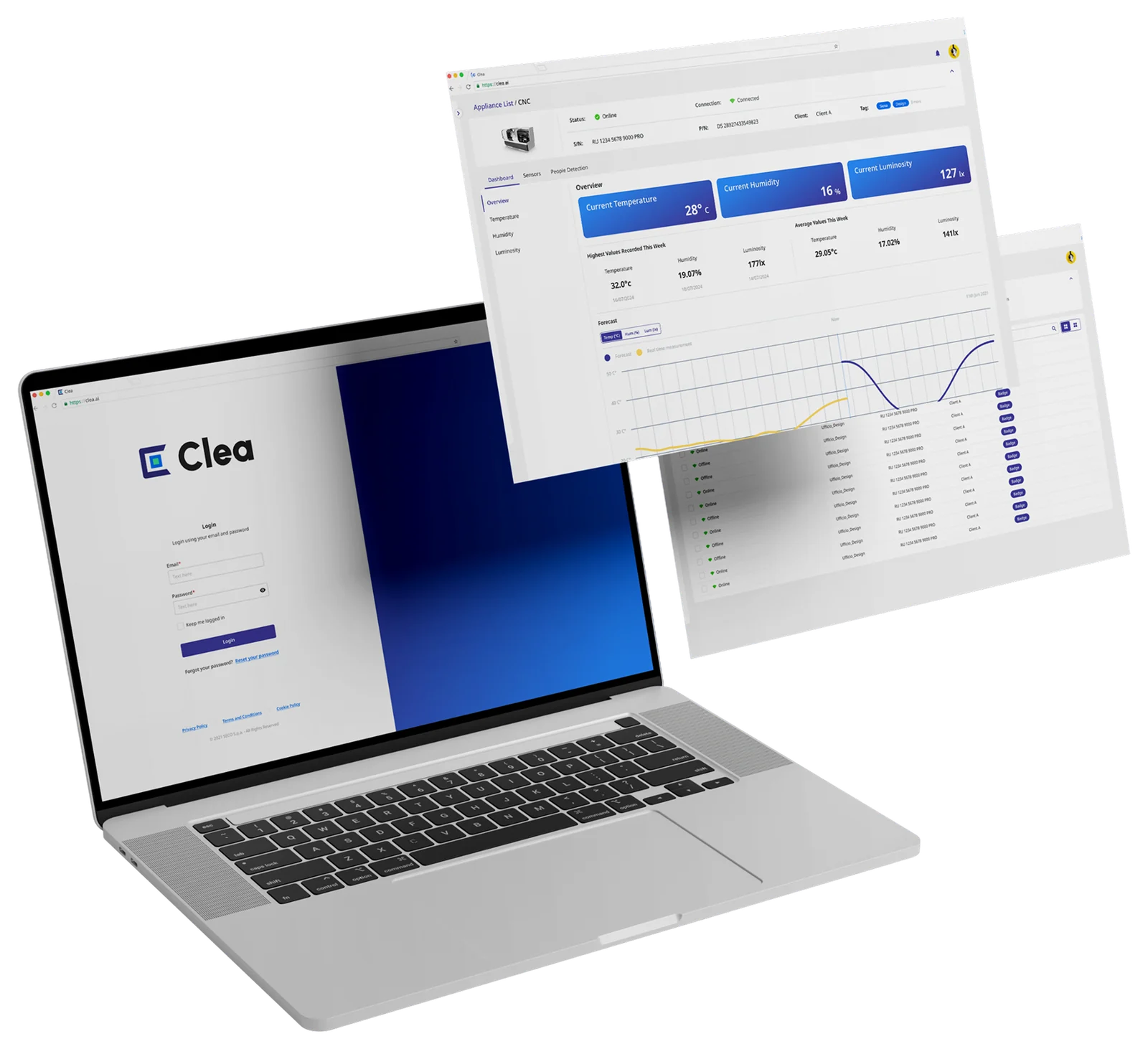
Clea ecosystem interfaces displayed across a laptop and layered operational dashboards.

Clea Console

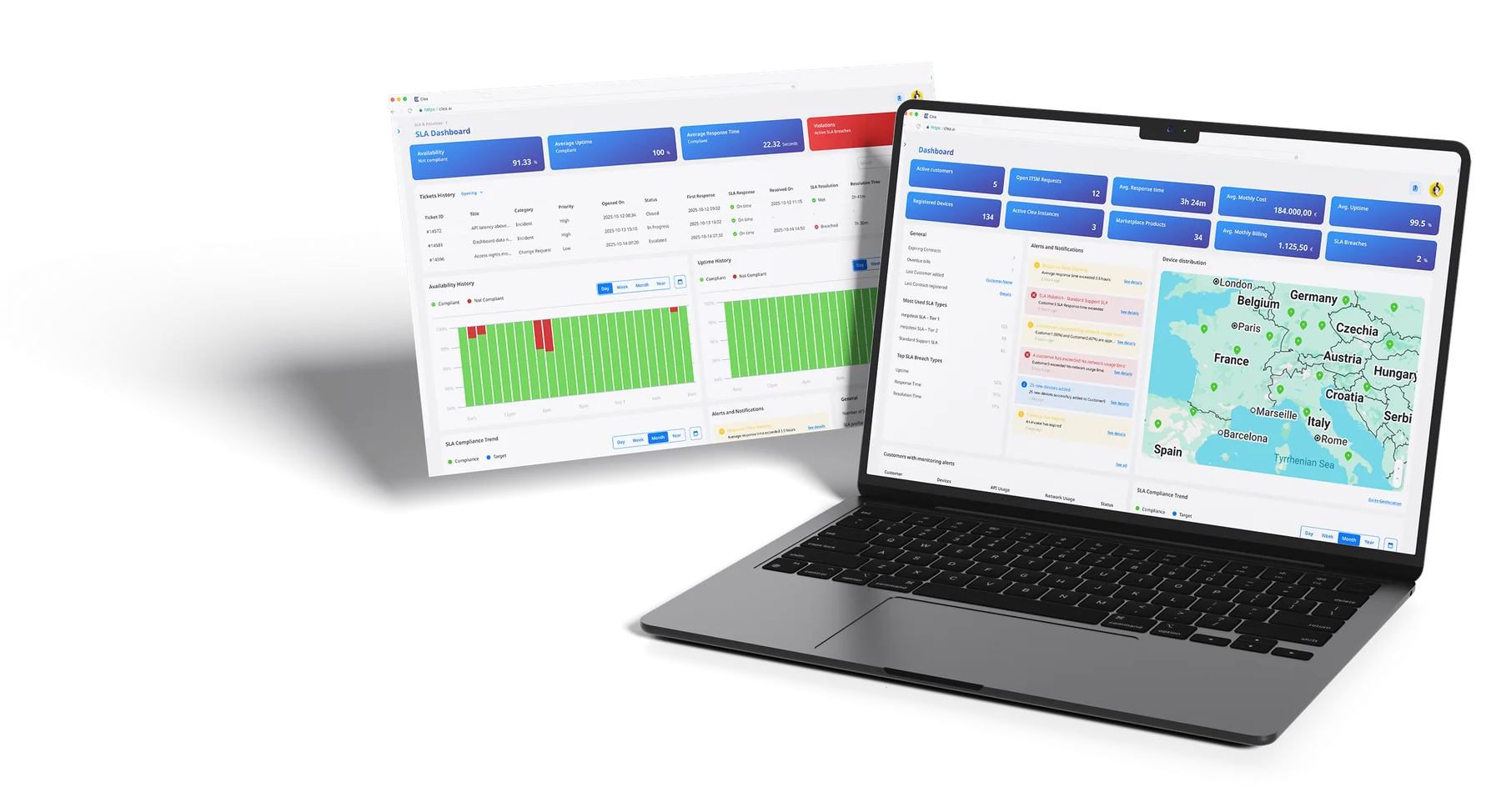
One example of the many parts that make up the Clea ecosystem is Clea Console. Designed as a governance platform for the SECO software ecosystem, it centralizes operational control, client management, contracts, instances, usage metrics, SLA, and billing. The work required defining the logic, flows, and UX for a product intended for both internal teams and clients, with differentiated views based on permissions and roles.

Role
Project ownership, UX/UI design of the entire platform, from flow and information architecture definition to the creation of final mockups.
Deliverable
User flows, user stories, experience architecture, management modules, client views, UI components, and high-fidelity mockups.
Goal
To create a single governance platform for managing data, contracts, billing, SLA, and instances.
Outcome

A modular platform that makes SECO software service management clearer, offering internal teams operational control tools and clients a more transparent view of instances, usage, SLA, and service information.

Clea Console governance and SLA dashboards displayed on a laptop and an additional screen.

ProjectValue

Value Generated

The project defined a shared design foundation for a modular software suite, capable of holding together products, services, user roles, and diverse touchpoints within the same ecosystem.

  • A shared logic for the entire ecosystem
  • Continuity across tools and operations
  • Foundation for new module integration

Skills Applied

The work required structuring an ecosystem made up of diverse modules, defining shared logic for navigation, dashboards, data management, and UI components.

  • UX/UI for modular enterprise platforms
  • Information architecture and service logic
  • Design system for modular products

Contribution

I contributed to structuring a shared UX/UI foundation for the entire suite, defining navigation logic, components, and cross-module patterns, with ownership roles over specific project areas such as Clea Console.

  • Common navigation for modular products
  • Reusable UI components across areas
  • Scalable structure for new modules